Structure and chassis of the Audi TT MK1 (8N)
Reinforced structure and deformation zones for protection and rigidity of the chassis.
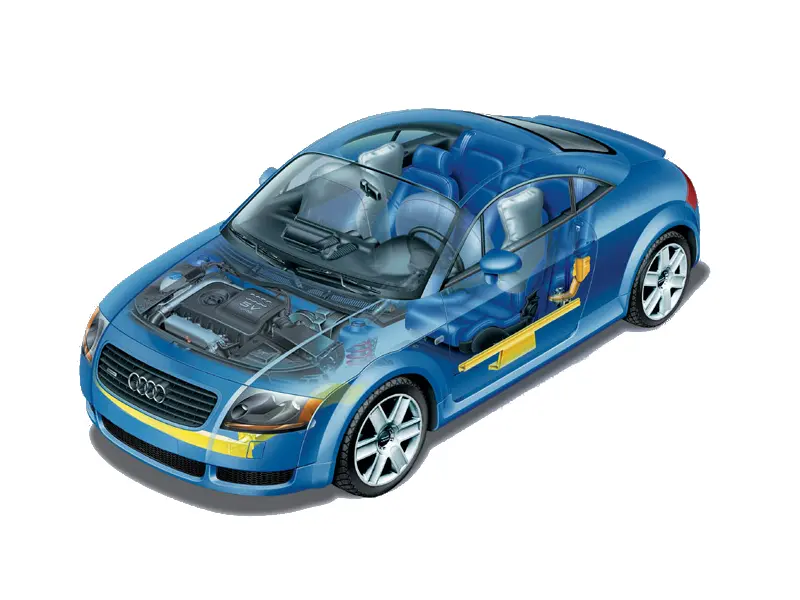
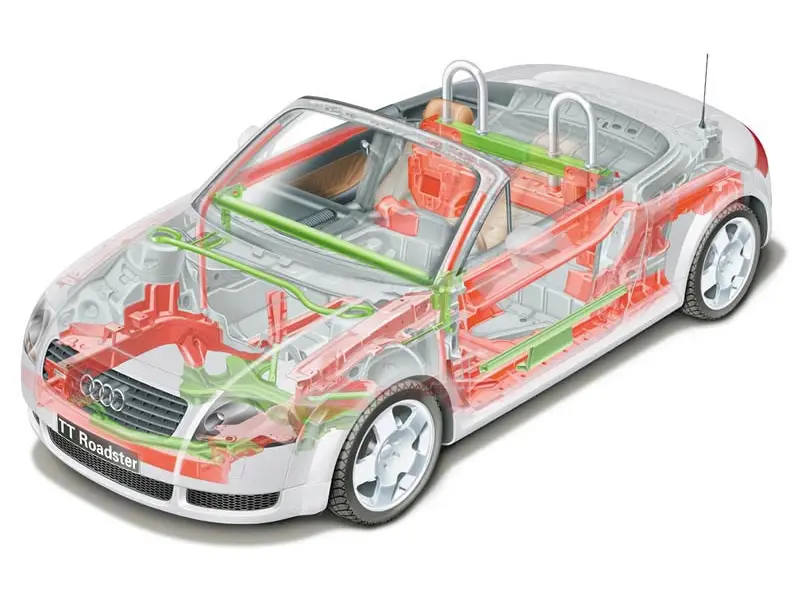
Targeted Deformation
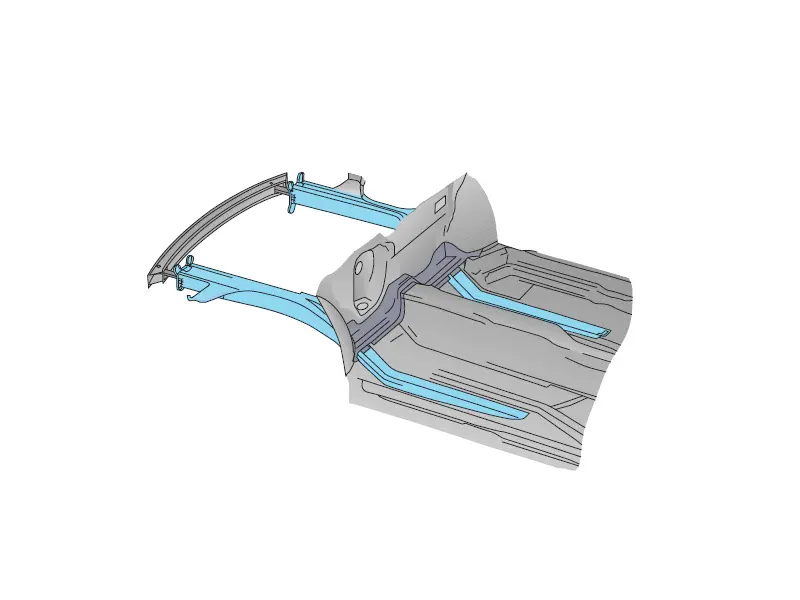
Targeted deformation in the front area of the vehicle ensures the transformation of the impact energy without affecting the stability of the passenger compartment. The spars are made from sheet metal of 2 mm, 3 mm and 1.5 mm thickness continuously welded by crushing. Robust cross-links ensure that, in case of induction of the force on one side only, the side turned on the opposite side to the impact is also caused to deform and absorb energy.
The structure of the bodywork of the rear part is designed to ensure the maximum integrity of the fuel system even in the event of serious accidents and to reduce the stress on the occupants of the vehicle. The Audi TT Coupe not only meets the collision requirements currently provided for by legislation, but already meets the frontal and side collision requirements defined for future EU and US standards.
A-pillar
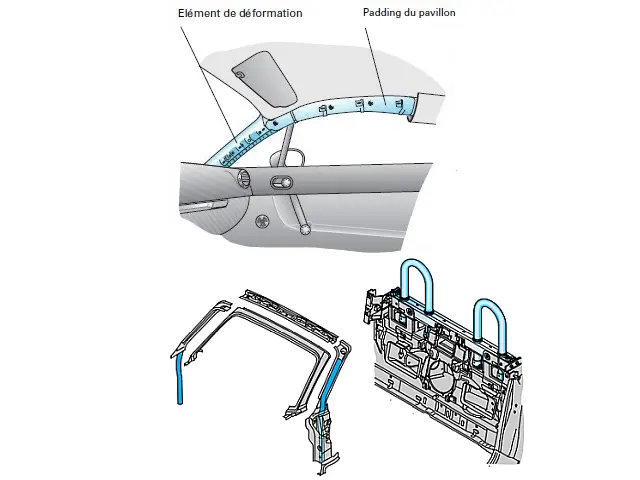
On the coupe, foam padding was integrated into the pavilion area to protect the head. The A-pillar is equipped with an additional welded deformation element. These measures enabled Audi to meet the new US head impact legislation for the first time.
On the roadster, the A-pillar is a reinforced integrated tubular system made from high-strength steels. Complemented by the two safety arches securely anchored in the body and the extremely resistant A/windshield cross-link, this system offers the most effective protection even in the event of a vehicle overturning.
B-pillar
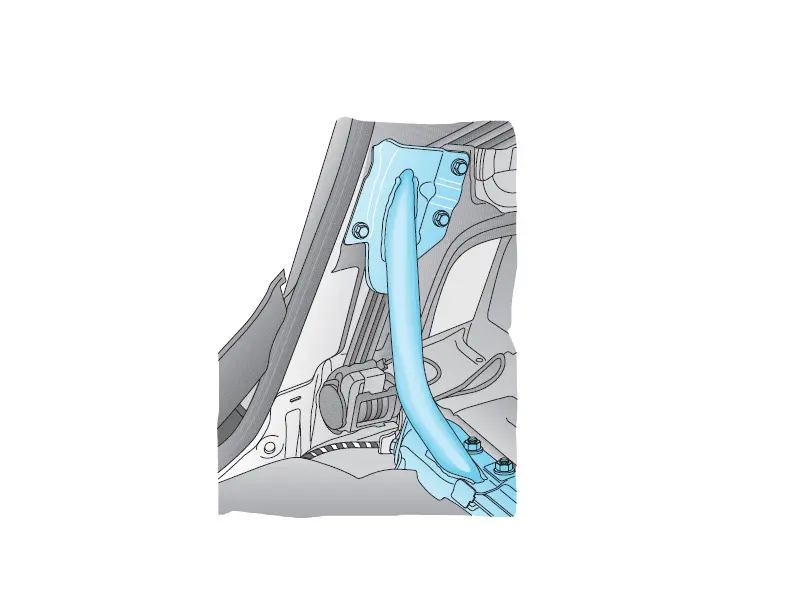
The structure of the body is particularly rigid in the event of a side collision, although the B-pillar is not in one part. An additional transverse reinforcement of the B-pillar in the lower part, in the direction of the lateral support of the rear seat, results in a reduction of the deformations of the cabin and the penetration speeds of the lateral structure. The occupants are thus less solicited.
Anti-collision profile
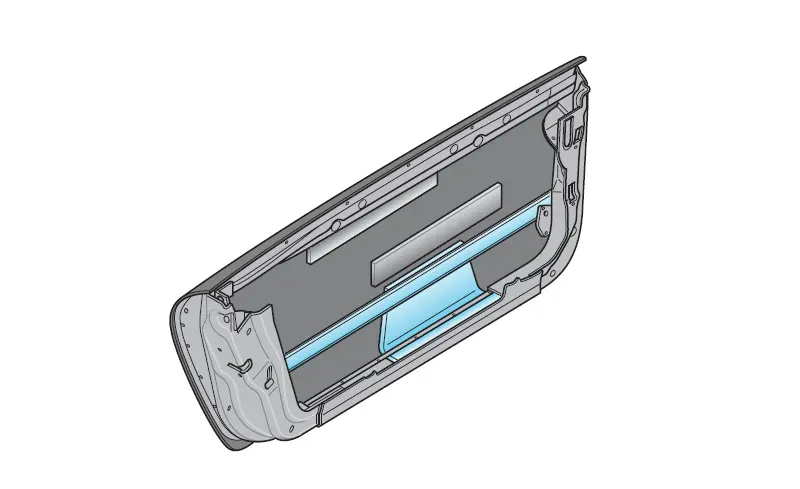
Since in the case of a side collision, the deformation stroke intended to neutralize the energy is very limited, various measures taken at the design level must fulfill this task effectively.
This is the objective of the door’s anti-collision device, which consists of a high-strength aluminium spun profile. The double square profile can absorb high energy.
In the event of a lateral collision, the impact forces are redistributed by the anti-collision profile at the threshold and at the A and B posts.
Door sill
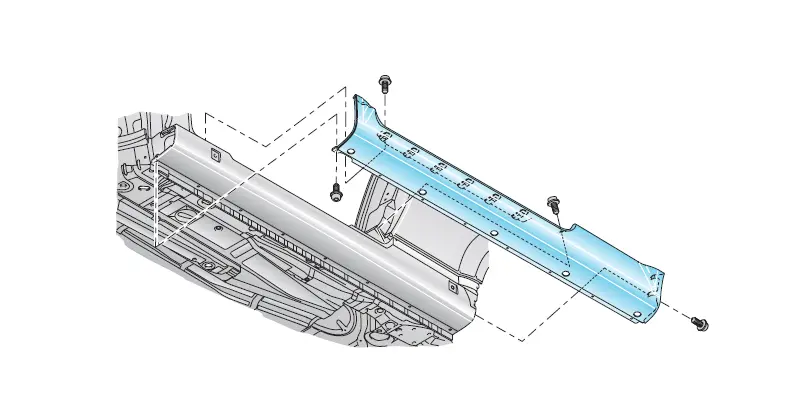
The solid door sill also absorbs energy and simultaneously transmits it to the sturdy floor-frame.
The door sill coating is made of steel and is fixed by 17 screws with washer on the sill itself.
Observe the correct vehicle lift jacking points to avoid denting the sill.