Project 297 - The prototype behind the Audi TT MK1
The genesis of the Audi TT MK1.
In the early 1990s, Audi enjoyed a solid technical reputation thanks to its five-cylinder engine, all-wheel drive and the use of aluminium in the design of its vehicles. However, its range of sedans and estates, although functional, is sorely lacking in character. The angular and elegant design of the models was certainly attractive, but remained discreet to the point of going unnoticed. The real problem was the lack of a strong visual identity.
The brand then decided to design an attractive roadster, capable of generating real emotion, using the new transversal architecture of the next generation (New Beetle, Golf IV, A3, ...) that the Volkswagen group was preparing.
In early 1994, design work was assigned to J Mays, who had recently been appointed head of Audi design.
The birth of Project 297
J Mays convinces his friend Freeman Thomas, with whom he has just collaborated in California on the Volkswagen Concept I, which will become the new Beetle, to join his team of designers in Ingolstadt.
At first, Freeman Thomas declined the offer, but at J Mays' insistence, they eventually reached an agreement for Freeman Thomas to join the team for a period of about six months.
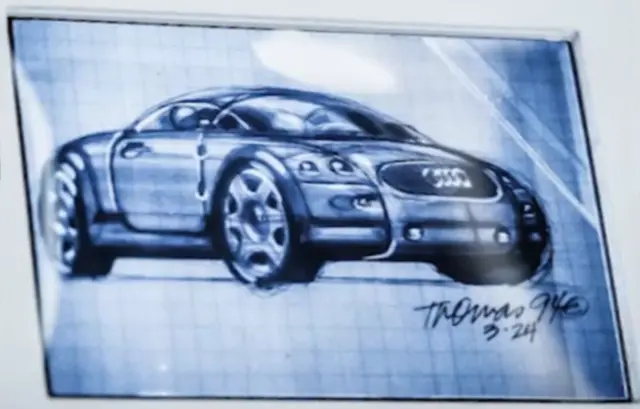
Sketch of Freeman Thomas dated March 24, 1994
It was not long after Freeman Thomas arrived in Ingolstadt that J Mays went through Freeman Thomas' office and noticed the first sketches of a sports car that would become the TT.
From this early stage, the design is distinguished by a certain consistency, using a few simple lines to define the car.
J Mays asks if he can borrow one of the sketches, and then shares it with Franz-Josef Paefgen, head of R&D. It immediately understands the potential and asks designers to continue their work with the utmost discretion.
J Mays later stated, “This is the fastest car design approval procedure I’ve ever done in my life.”
It was mid-April 1994 and Project 297, the internal code name for the Audi sports car, was launched.
Work in all discretion
Freeman Thomas had already imagined a set of declinations of his concept in the form of a coupe, a roadster, as well as a spyder with a simplified hood and a spyder with a rigid roof.
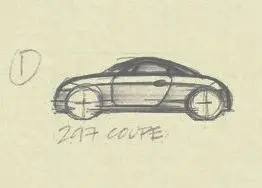
Coupe
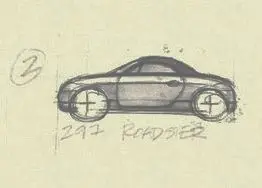
Roadster
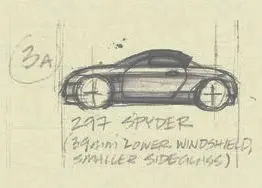
Spyder
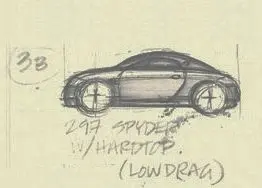
Rigid Roof Spyder
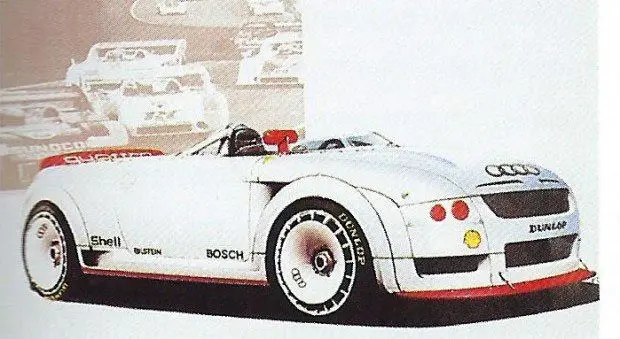
Syder with lowered windscreen
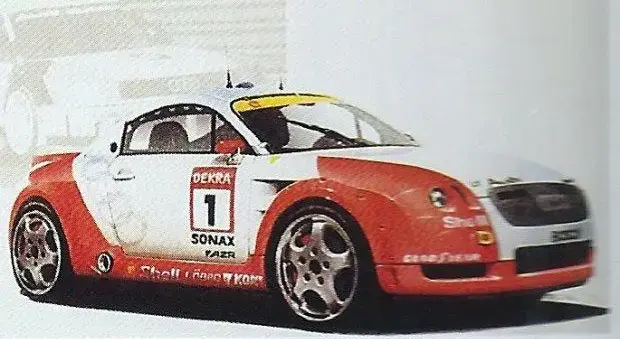
Syder with rigid roof
He worked on the roadster version of his concept in his apartment in Ingolstadt for two weeks.
Then J Mays installs Freeman Thomas and a small team, a few kilometers from the design offices in Ingolstadt, on the premises of the independent design company Uedelhoven Studios with which Audi is in partnership.
The exact sequence of events leading to the concept car remains unclear, but the team certainly included at least Freeman Thomas and Ralf-Gerhard Willner for the exterior, Romulus Rost and Winfried Rückheim for the interior, and a team responsible for the clay models.
Their goal is to create accurate sketches and 1/4 scale models of the roadster and coupe, intended to be presented to management. These models, extremely detailed, already incorporate several specific ideas for the interior.
It is established that a rapprochement with Porsche was envisaged with the aim of producing a Porsche version of the roadster. This project was not successful because Porsche wanted the Audi version to integrate only less efficient engines without all-wheel drive.
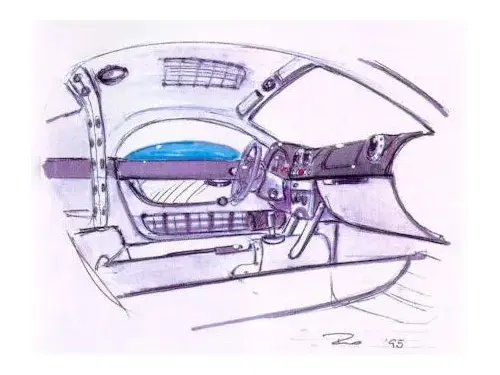
Inside the Roadster by Romulus Rost
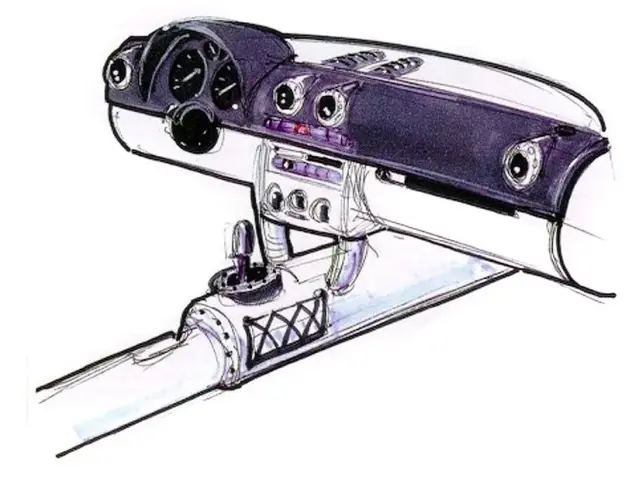
Board
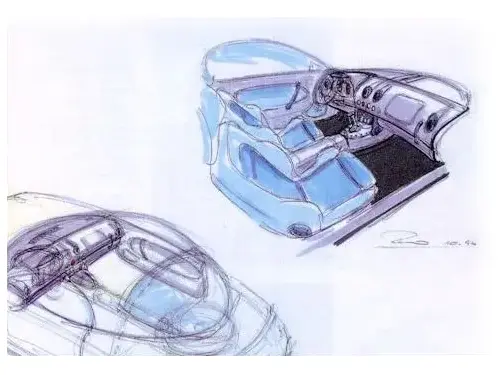
Inside the Roadster by Romulus Rost
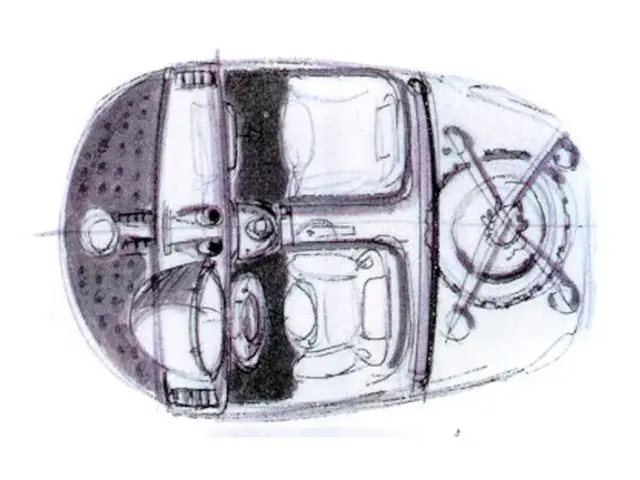
Interior view of the Roadster
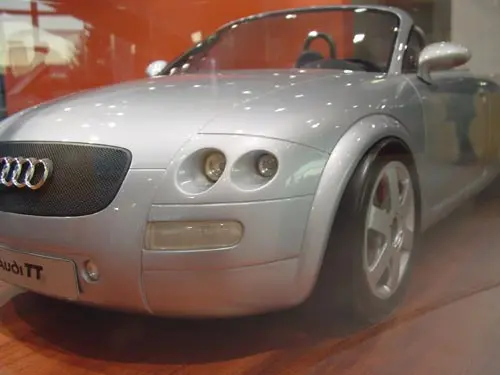
Model of the roadster in 1/4 scale
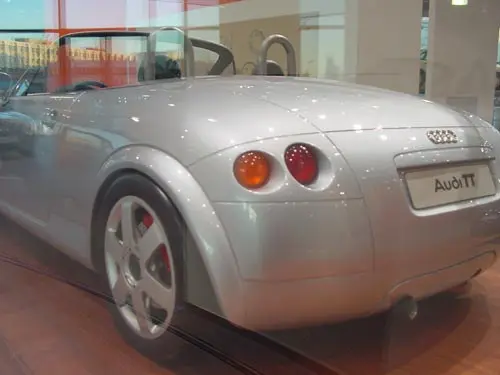
Model of the roadster in 1/4 scale
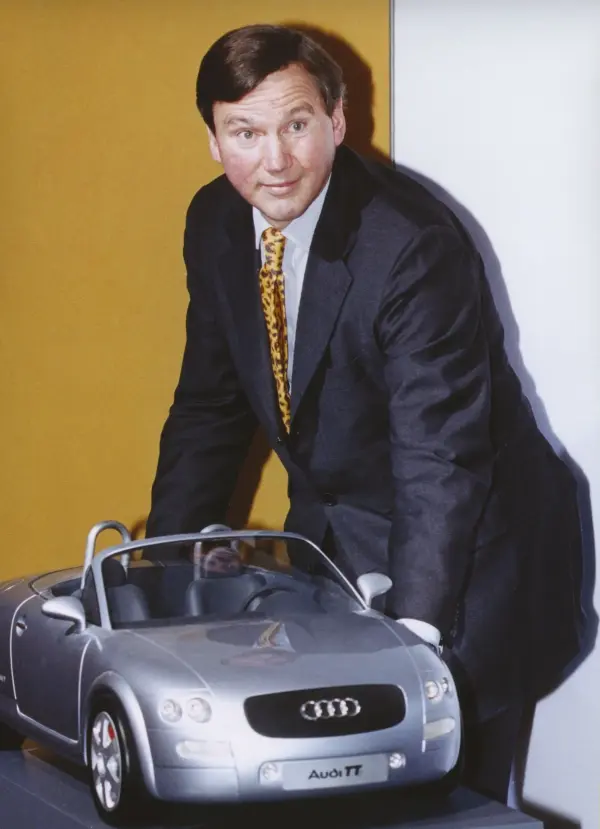
Franz-Josef Paefgen with the roadster model
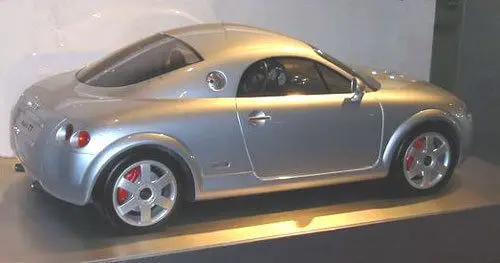
1/4 scale model of the coupe
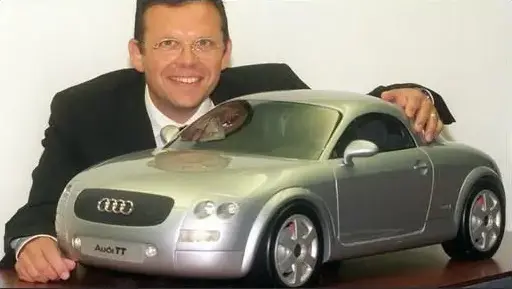
Peter Schreyer with the coupe model
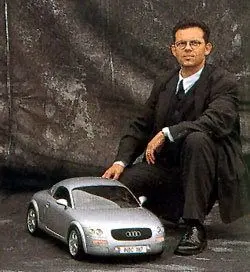
Peter Schreyer with the coupe model
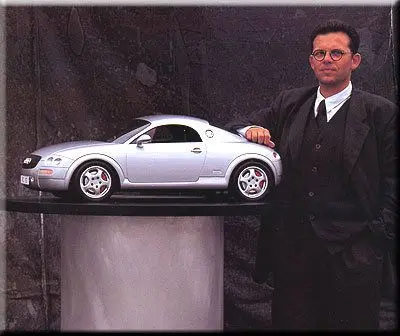
Peter Schreyer with the coupe model
A first presentation of the roadster to Audi management was held around September/October 1994. At the meeting, it was explained that the basic design would allow the TT to work as both a convertible and a coupe. Ferdinand Piëch, director of the Volkswagen Group, looks at a sketch of the coupe and decides that the team must focus on this declination of the Freeman Thomas concept.
The team is growing, especially with the arrival of Martin Longmore. When J. Mays leaves Audi, Peter Schreyer is promoted to his place. At the same time, Thomas had to leave regularly to return to the United States, leaving Martin Longmore in charge of the development of his concept.
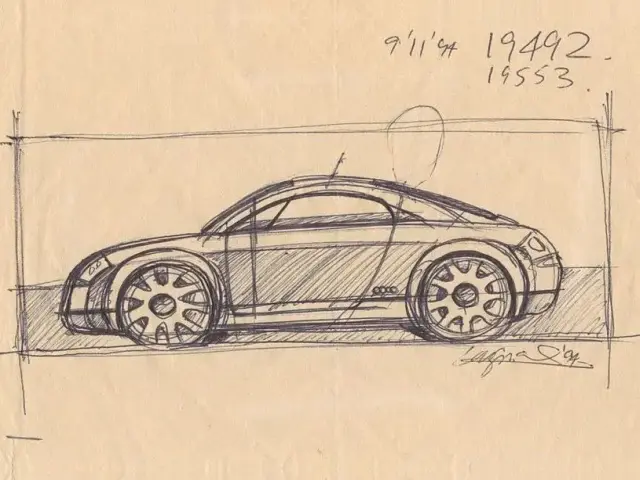
Drawing by Martin Longmore dated November 09, 1994
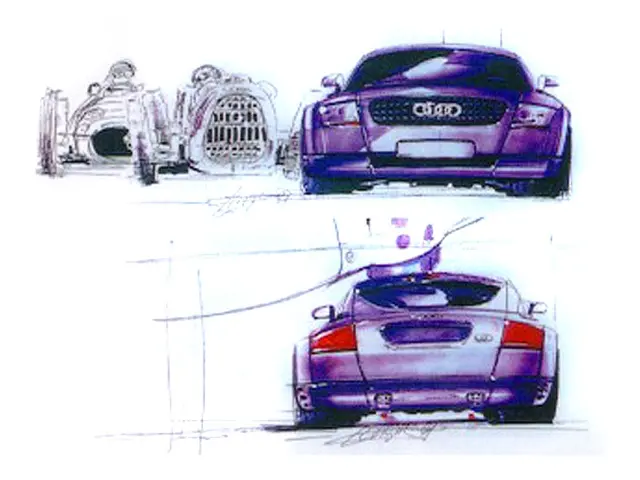
Drawing by Martin Longmore
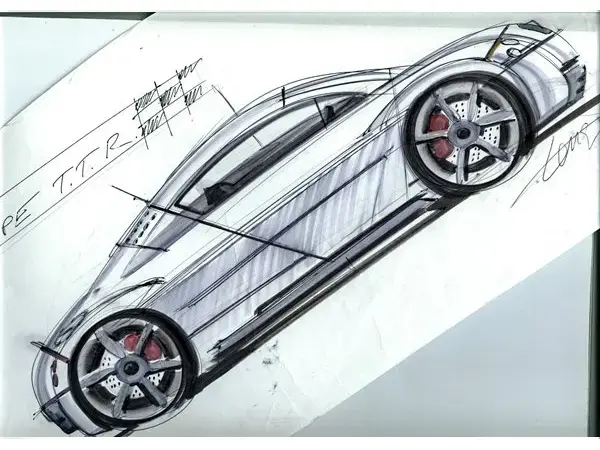
Drawing by Martin Longmore
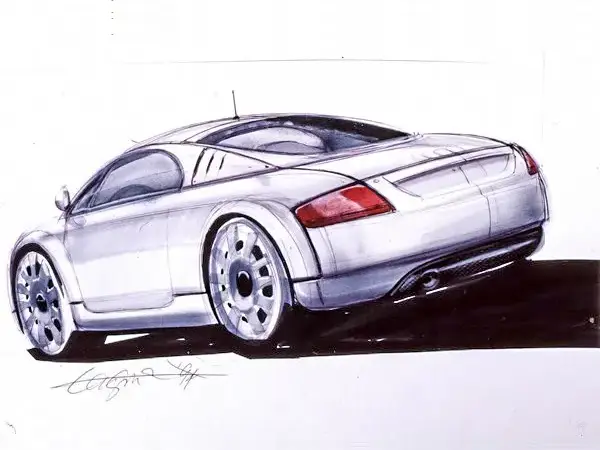
Drawing by Martin Longmore
The coupe was approved by Audi management in early 1995 and a scale 1 clay model was produced.
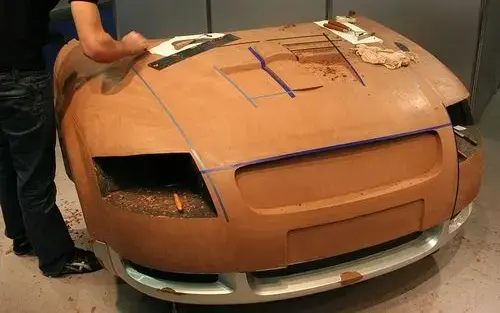
Manufacture of the scale 1 model
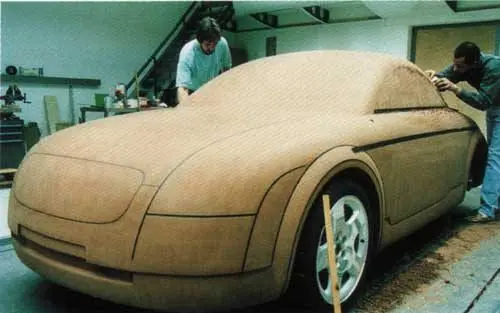
Manufacture of the scale 1 model
Observing the scale 1 model with Martin Longmore, Franz-Josef Paefgen suggested applying an alternative graphic typical of Audi coupe side windows.
Appreciating Martin Longmore's proposal, he decided that these windows would be integrated into the production version, while the show car would not have them, in order to deceive the press about the final design solution.
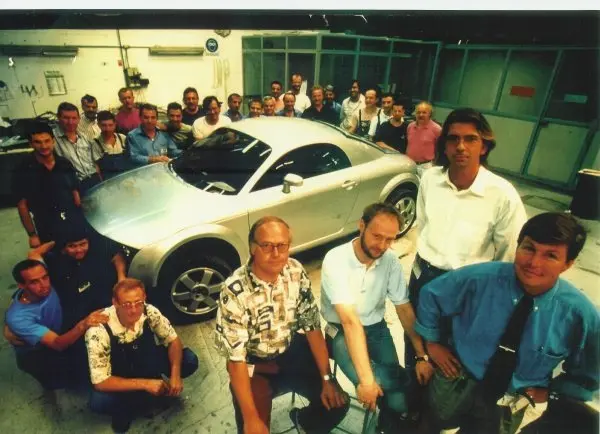
Freeman Thomas and the Italdesign team ahead of the concept car
The model was then sent to Italdesign in Italy. Audi, in partnership with Italdesign for the manufacture of a new set of panels for one of the Auto Union racing cars of the 1930s, agreed that they would also build the TT exhibition car.
Freeman Thomas then moved to Italdesign's premises near Turin, where he oversaw the creation of the steel car.
The concept car of the coupe was finalized in a few months, and came out of the Italdesign workshops in August 1995.
The choice of name
Even before the first sketches, it was considered to call the car "A3 Coupe". However, the name "TT" has emerged to emphasize the revolutionary character of the vehicle. Audi explained that this car represented a real break from the established conventions, and that it needed an equally revolutionary name.
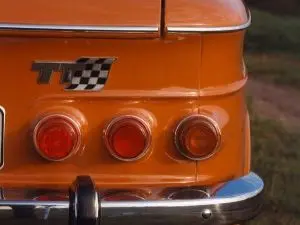
Before reaching that consensus, there were many proposals and discussions. Freeman Thomas leaned for "Alpensieger" - Winner of the Alps in French and also the name of an Audi Type C from 1911 - while J. Mays would have preferred "Zuma" - the name of a Malibu beach in California. Finally, "TT" made the consensus because it evoked the Tourist Trophy but also the NSU TT.
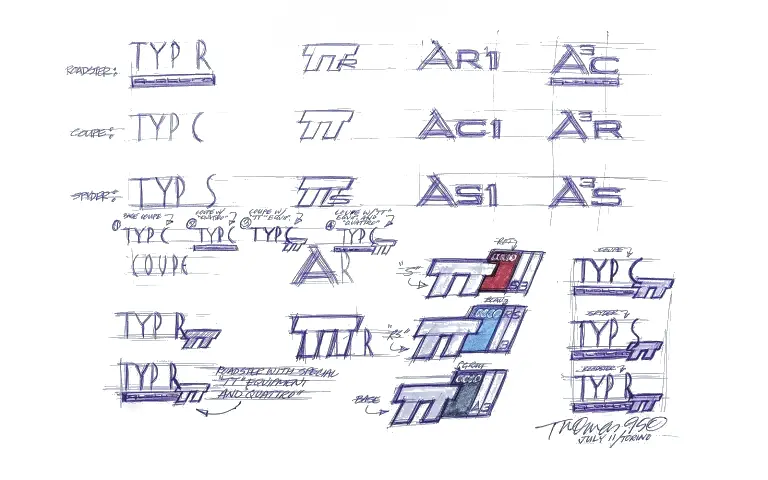
Reflections by Freeman Thomas
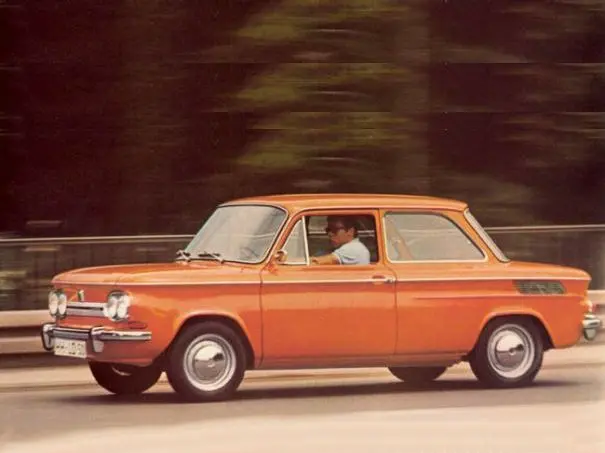
By choosing this name, Audi pays tribute to the “Tourist Trophy”, a legendary race taking place on the Isle of Man in Great Britain. Today it is only contested by motorcycles, but at the beginning of the 20th century cars also competed there. Among the competitors were Auto Unions and NSUs, brands that would later merge to give birth to Audi.
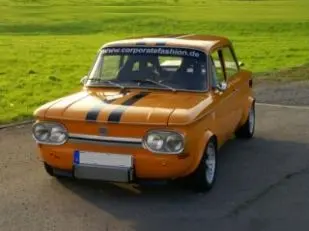
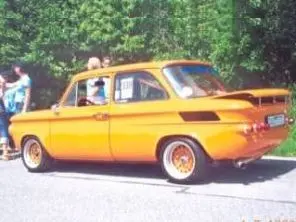
The NSU TT is a model released in 1965 and followed in 1967 by a competition version, called TTS. Equipped with a 1000cc engine with a maximum power of 85 hp, it played a leading role in motorsport. In 1967, she won the Tour of Europe, the longest rally event in the world at that time.
The team around the project
J. Mays and Freeman Thomas were behind Project 297, but it was a whole team that carried and enriched the concept right up to the production car.
The contributions of Martin Longmore, Romulus Rost and Martin Smith were crucial in the design, playing a decisive role in shaping the final concept. Torsten Wenzel played a major role in the transition from conceptual study to mass production. Peter Schreyer has transformed the 1/4 scale models into a series version that everyone knows today. Finally, it is the management of Audi that has provided the means, created the conditions, and established the working environment for the complete realization of the project.
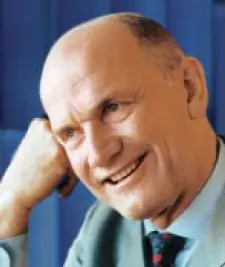
Ferdinand Piëch
Visionary of the VW group, he validates the TT project from the concept stage and pushes Audi’s industrial audacity.
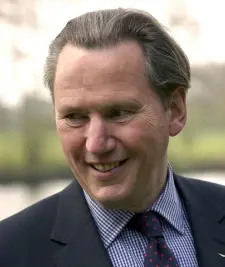
Franz-Josef Paefgen
Head of Audi development, he supports the TT and gives the green light to its production.
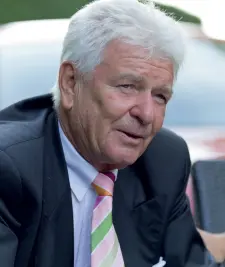
Hartmut Warkuß
As VW-Audi design boss, he oversees the TT project in the group’s overall design strategy.

J Mays
Head of design at Audi USA, he saw the potential of Thomas’ sketch and launched the TT concept.

Freeman Thomas
Designer of the original TT concept, he creates the iconic shape and Bauhaus spirit of the model.

Peter Schreyer
Head of Audi design following J Mays, he finalizes the forms and drives the transition from concept to production.

Ralf-Gerhard Willner
A project engineer, he is in charge of translating the design of the TT into a viable technical architecture on the A3/Golf platform.
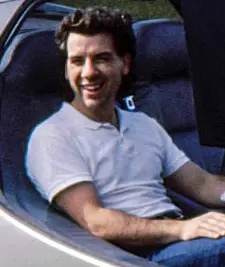
Martin Longmore
Exterior designer, he refines the shape, creates key details and develops the cabriolet version.

Romulus Rost
Responsible for the interior, he ensures ergonomics and consistency of the driving position.

Martin Smith
As part of the Audi Europe design framework, he participates in the validation of the standard design.

Winfried Rückheim
Head of the Roadster project, he oversees the industrialization of the TT cabriolet.
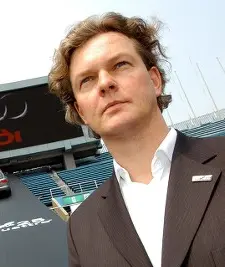
Torsten Wenzel
As a junior designer, he executed the standard exterior design under the direction of Peter Schreyer.
All models of Audi TT MK1
Production models
- Coupe 150 hp
- Coupe 163 hp
- Coupe 180 hp
- Coupe 180 hp tiptronic
- Coupe 180 hp quattro (5r)
- Coupe 180 hp quattro
- Coupe 190 hp
- Coupe 190 hp tiptronic
- Coupe 190 hp quattro
- Coupe 225 hp
- Coupe 240 hp
- Coupe 250 hp DSG
- Coupe 250 hp
- Roadster 150 hp
- Roadster 163 hp
- Roadster 180 hp
- Roadster 180 hp tiptronic
- Roadster 180 hp quattro
- Roadster 190 hp
- Roadster 190 hp tiptronic
- Roadster 190 hp quattro
- Roadster 225 hp
- Roadster 250 hp DSG
- Roadster 250 hp